
The Future of Field Service: How AI is Transforming the Trades
Let’s be real. Field service is under intense pressure.
Veteran techs are retiring faster than we can replace them. Equipment is getting more complex every year. And the time new techs have to onboard before they’re sent out alone just isn’t long enough. This means they’re expected to perform before they’ve had time to build real confidence. Meanwhile, customers expect faster fixes, cleaner work, and fewer callbacks.
But here’s the thing. We’re also living through one of the most exciting technology shifts this industry has ever seen. And if you’re a technician or running a field service operation, this shift directly affects your day-to-day work and your long-term career.
The Problem
The numbers don’t lie. According to the Technology Services Industry Association, the service industry is facing a worker deficit of more than 2.6 million people. Nearly half of all field technicians are now over the age of 50.
When experienced techs retire, they don’t just leave open roles. They take decades of knowledge with them. The gut feel for what’s wrong with a system. The shortcuts learned over twenty years. The ability to hear a unit and know something isn’t right.
That’s the gap technology is starting to fill. Not by replacing technicians, but by backing them up. Especially the ones still learning the job.
The Hardware Shift: Smarter Equipment
Sensors and Predictive Maintenance
Equipment is getting smarter.
Modern HVAC systems, refrigeration units, and industrial equipment now come packed with sensors that monitor everything in real-time: temperature, pressure, vibration, energy consumption, you name it.
According to Buildings.com, 2025 is the tipping point for smart HVAC integration. These systems can predict failures before they happen, which means you’re showing up to prevent problems instead of responding to emergencies. That’s a major shift from the old “wait until it breaks” model.
In real terms, this means more scheduled work, fewer emergency calls at 2 a.m., and walking onto a job site already having a strong sense of what’s likely wrong. Even if it’s equipment you haven’t worked on a dozen times yet.
The Software Shift: Knowledge When You Need It
This is where things really change.
Digital knowledge tools are tackling one of the biggest challenges in field service: how do you transfer 30 years of experience from a retiring tech to someone who just started?
The answer is simple in theory and powerful in practice. Capture that knowledge and make it available exactly when and where it’s needed.
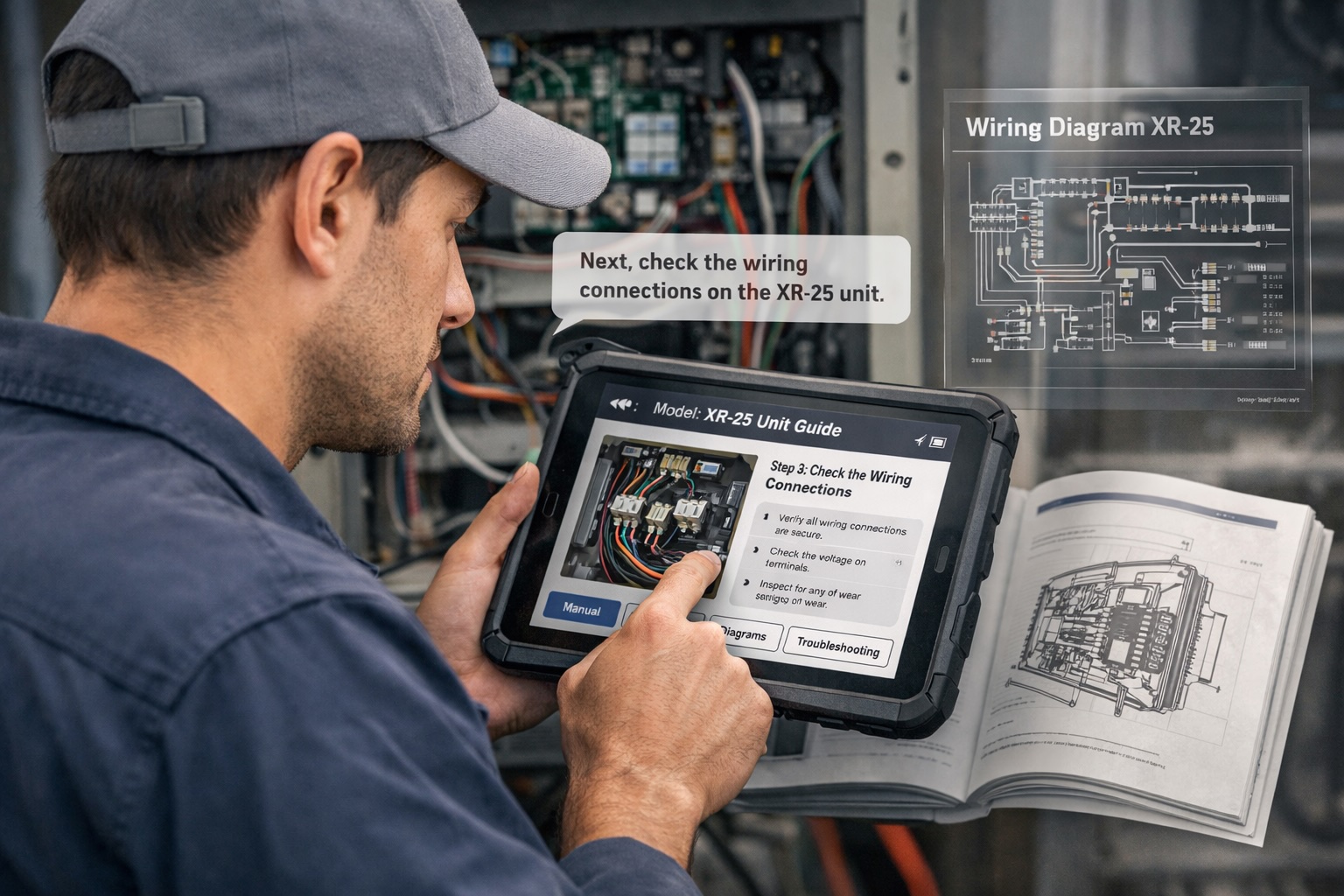
Instead of calling the office or a senior tech and hoping someone picks up, you can ask your assistant about a specific model and get step-by-step guidance pulled directly from manufacturer documentation. That includes the right manuals, images, and details so you know you’re looking at the correct information every time.
For new technicians, this changes everything. Instead of spending months learning through trial and error, they can get guided support on real jobs, in real time. That dramatically shortens ramp time and helps new hires become confident, productive contributors faster without overloading senior techs or lowering standards.
The goal isn’t another app. It’s fewer callbacks, faster fixes on site, and more confidence when you’re standing in front of equipment you haven’t worked on before.
According to a 2025 Geotab survey, 88% of companies using field software say it directly contributes to increased uptime, reduced costs, and better customer experiences.
Why This Matters for Your Operation
For Technicians
These tools aren’t about replacing you. They’re about making you more valuable.
With the right support, technicians can take on more complex jobs, solve problems faster, and rely less on memory or guesswork. For newer techs, it means you don’t have to guess your way through unfamiliar equipment just to prove yourself. Over time, that leads to less frustration, more consistency, and stronger career paths.
For Service Companies
The companies that adopt these technologies early are going to win. Period.
The field service management market is projected to nearly double from $5.6 billion in 2025 to $9.7 billion by 2030. But beyond market size, this is about real operational outcomes.

At the end of the day, this is about helping new technicians get good faster without burning out senior techs or sacrificing quality.
- Training new hires faster
- Reducing repeat visits
- Keeping customers satisfied without burning out technicians
This is how teams scale without losing quality or people along the way.
The Bottom Line
The future of field service isn’t about robots taking over job sites.
It’s about smart tools that make technicians more capable, help companies do more with the teams they already have, and ultimately deliver better service to customers.
The equipment is getting smarter. The software is getting more helpful. And the technicians who embrace these changes are going to be the ones leading this industry into the next decade.
That’s the future we’re building toward & it’s ready to show up on your job site today.